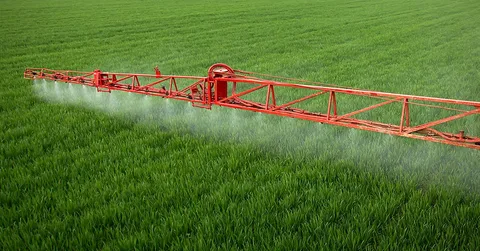
Weed Control: The primary purpose of herbicides is to control weeds that can choke out crops and
reduce yields. Herbicides target a wide range of weed species, including broadleaf weeds, grasses,
and sedges.
Pre-Emergent Control: Herbicides can be applied before crop emergence to prevent weed seeds from
germinating and establishing in the field. Pre-emergent herbicides create a weed-free environment
for crops to grow without competition.
Post-Emergent Control: After crops h00ave emerged, herbicides are used to control existing weed
populations. Post-emergent herbicides target weeds that have already germinated and are actively
growing, helping to reduce weed pressure throughout the growing season.
Selective Herbicides: Some herbicides are selective, meaning they target specific types of weeds
while leaving crops largely unaffected. This selective action allows farmers to control weeds
without harming their crops, enabling efficient weed management.
Non-Selective Herbicides: Non-selective herbicides, on the other hand, target a broad spectrum of
weed species and can be used to clear entire areas of vegetation. They are often used for weed
control in non-crop areas such as fence lines, roadsides, and industrial sites.
Integrated Weed Management (IWM): Herbicides are part of an integrated weed management approach
that combines cultural, mechanical, and chemical control methods. Integrating herbicides with other
practices like crop rotation, mulching, and tillage helps to minimize weed resistance and optimize
control.